 Image 1 of 1
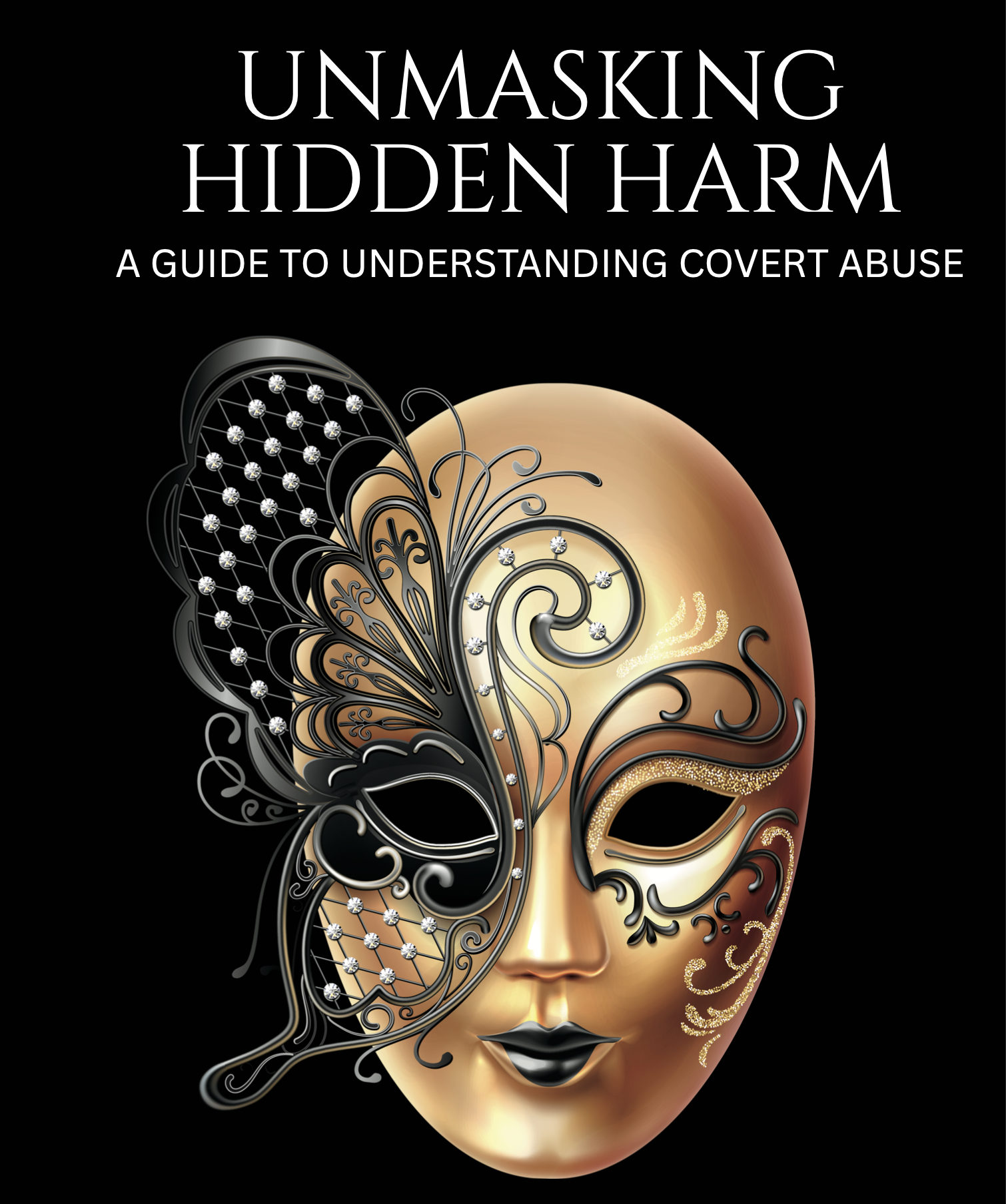
Unmasking the Hidden Harm is a clarity guide for anyone who has lived through or quietly questioned the kind of harm that doesn't leave bruises, but leaves a mark all the same. The kind of harm that creeps in slowly. That erodes your confidence, twists your intuition, and leaves you unsure whether what you experienced was even real.
This guide was born from years of navigating that confusion myself - of gaslighting dressed as love, control wrapped in intellectual language, and subtle emotional manipulation that made me question my own memory, instincts, and worth. And in every conversation I’ve had since, whether with survivors, professionals, or people just starting to wonder if something was wrong, I’ve heard the same text book story.
This is the textbook for their textbook, the invisible one they all seem to follow, as if they’ve been part of the same playbook, the same unspoken script, the same quiet club of harm that shows up in story after story, always slightly different, but unmistakably familiar.
You don’t need to be sure it was abuse to use this guide. You don’t need a diagnosis. You don’t even need to know what happened, only that something didn’t feel right.
This guide was created for:
People who are beginning to question a dynamic that felt/feels confusing or diminishing
Survivors looking for language to describe what they’ve lived through
Therapists, coaches, and facilitators supporting clients through relational trauma
Friends and family who want to understand what covert abuse actually looks and feels like
Anyone seeking a deeper understanding of how harm can occur without visible wounds
Most people associate abuse with visible violence. But covert abuseis subtle. It’s psychological, emotional, spiritual, and often relational.
It hides inside relationships that look supportive on the outside.
It’s rationalized. Even celebrated.
That’s what makes it hard to name. And harder to explain.
Unmasking the Hidden Harm was created for that moment of doubt, for when you start asking questions like:
Was I overreacting?
Why do I feel so confused all the time?
Why do I miss someone who made me feel smaller?
Why can’t I explain what happened in a way people understand?
It’s not a workbook.
It’s not a self help manual.
It’s not a step by step healing plan
It’s a clarity tool.
Unmasking the Hidden Harm is a trauma aware guide designed to name what covert abuse looks like, feels like, and does to a person’s sense of self.
Inside, you’ll find:
Straightforward breakdowns of emotional and psychological control tactics
The patterns of manipulation, minimization, and distortion that make covert abuse hard to see
A Red Flag Tracker for personal reflection
Language that helps survivors and observers make sense of the fog
Guidance written in accessible, validating, and professional terms
Unmasking the Hidden Harm is a clarity guide for anyone who has lived through or quietly questioned the kind of harm that doesn't leave bruises, but leaves a mark all the same. The kind of harm that creeps in slowly. That erodes your confidence, twists your intuition, and leaves you unsure whether what you experienced was even real.
This guide was born from years of navigating that confusion myself - of gaslighting dressed as love, control wrapped in intellectual language, and subtle emotional manipulation that made me question my own memory, instincts, and worth. And in every conversation I’ve had since, whether with survivors, professionals, or people just starting to wonder if something was wrong, I’ve heard the same text book story.
This is the textbook for their textbook, the invisible one they all seem to follow, as if they’ve been part of the same playbook, the same unspoken script, the same quiet club of harm that shows up in story after story, always slightly different, but unmistakably familiar.
You don’t need to be sure it was abuse to use this guide. You don’t need a diagnosis. You don’t even need to know what happened, only that something didn’t feel right.
This guide was created for:
People who are beginning to question a dynamic that felt/feels confusing or diminishing
Survivors looking for language to describe what they’ve lived through
Therapists, coaches, and facilitators supporting clients through relational trauma
Friends and family who want to understand what covert abuse actually looks and feels like
Anyone seeking a deeper understanding of how harm can occur without visible wounds
Most people associate abuse with visible violence. But covert abuseis subtle. It’s psychological, emotional, spiritual, and often relational.
It hides inside relationships that look supportive on the outside.
It’s rationalized. Even celebrated.
That’s what makes it hard to name. And harder to explain.
Unmasking the Hidden Harm was created for that moment of doubt, for when you start asking questions like:
Was I overreacting?
Why do I feel so confused all the time?
Why do I miss someone who made me feel smaller?
Why can’t I explain what happened in a way people understand?
It’s not a workbook.
It’s not a self help manual.
It’s not a step by step healing plan
It’s a clarity tool.
Unmasking the Hidden Harm is a trauma aware guide designed to name what covert abuse looks like, feels like, and does to a person’s sense of self.
Inside, you’ll find:
Straightforward breakdowns of emotional and psychological control tactics
The patterns of manipulation, minimization, and distortion that make covert abuse hard to see
A Red Flag Tracker for personal reflection
Language that helps survivors and observers make sense of the fog
Guidance written in accessible, validating, and professional terms